
Cowen, Davies, Lauder Family Tree - Person Sheet
Cowen, Davies, Lauder Family Tree - Person Sheet
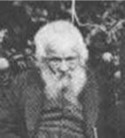
NameHenry Cadby WELLS 
 , GGG Grandfather, M
, GGG Grandfather, MBirth1819, Devizes, Wiltshire, UK
Death9 Dec 1908, Frankston, Victoria, Australia
BurialFrankston, Victoria, Australia
FatherRichard (“Dick”) WELLS , M (1775-1843)
MotherMartha CADBY , F (1781-1845)
Misc. Notes
When Henry Cadby WELLS was born on 25 February 1820 in Potterne, Wiltshire, his father, Richard, was 45 and his mother, Martha, was 39. He married Hannah Sarah HILL on 9 March 1839 in Plymouth, Devon. They had 12 children in 23 years. He died on 9 December 1908 in Frankston, Victoria, having lived a long life of 88 years.
By Alva “Bobbie” Davies and Avis Leigh
Early Life
Henry Cadby Wells was born in Devizes, England. Henry’s birthdate is thought to be 1819 but may have been 1820.
His father was Richard Wells, and mother was Martha Wells, (nee Cadby). The father was described as a driver and was said to have been a coachman of the regular stage coach running across Salisbury Plain ‘in days when an encounter with highwaymen was not uncommon’.
Henry inherited both is father’s and mother’s surnames.
Marriage and Family
Henry married Hannah Hill at Plymouth on 9th September 1839, and they sailed for Australia. They were married at the Church of St. Thomas a Beckett, Widcombe, near Bath. He sailed on 26th February 1840 to Australia on the Andromache. When the ship was just off the Isle of St. Paul, during a raging storm, a daughter was born. The little girl was named Mary, but at the suggestion of captain she was nick-named “Polly”. Sadly, Polly did not live very long and was buried at sea. The ship arrived in Melbourne on the 28th June 1840 after being becalmed off Port Phillip Bay for several days. [22]
All ships at that time had to anchor in Hobson's Bay off shore from Williamstown; the emigrants were taken by boat along the lower Yarra towards Melbourne. both banks of the river were then still densely covered with tea-tree and Wattle. At the township immigrants scrambled through mud, or as is recorded: ‘grandfather had to carry his wife ashore through water waist-deep' to a landing bank on the north side, where warehouses, inns and stores were replacing earlier hovels along the west end of Flinders street. Slightly uphill from this flood-prone area, Collins Street West had already developed into the main retail location, especially between Queen and King Streets. 'There were good shops with drugs, groceries, haberdashery, ironmongery; indeed each shop seemed to be quite an emporium’. [23]
Henry and Hannah are believed to have made their way down to Frankston where they stayed for a short time. This would require first crossing the river on a punt or a ferry as no bridge existed until the mid 1840s. They would then have travelled through virgin bush, either on horse back or perhaps with a horse and jinker or cart of some sort. They may have had some bullock tracks to follow, but we can be sure the track was slow and difficult. It probably took some days for the young couple, camping overnight along the way. One may wonder how many other travellers they might have met along the way, or did they only see Kangaroos, Wallabies, Dingoes and other wild life, as well as bird life and the Aborigines? No doubt there was also a large population of snakes. They may have passed some of the 500,000 sheep and 15,000 cattle that were in Victoria by that time, the property of licensed squatters. [24]
It is believed that after a short stay in Frankston, Henry and Hannah made their way down to Sorrento, then known as Point Nepean. They were blessed with another daughter, Mary Louise Wells, also nick-named “Polly” born 7th June 1841 at Sorrento and Baptised in the Church of England, Parish of St. James on the 10th October 1841. Polly was the eldest of 13 children, having 12 brothers. Polly is believed to have been the first white baby born to permanent settlers of the Mornington Peninsula.
Henry and Hannah’s children were:
—Mary Louisa (“Polly”) Wells (NB: there were two Mary Louisa Wells born to Henry and Hannah Wells. The first died on the ship coming from England. The second, “Polly” was born at Pt. Nepean in 1842.)
—Mary Louisa (“Polly”) Wells (b 7th June 1842) M. George Laudehr. After the death of George, Polly married David Kelly.
—William Henry decd. (b)
—Charles
—John dec’d
—Frank Richard
—Septimus (b1853)
—Octavius (b1856)
—Benjamin (b1858) inherited the 66 acres in Robinson Road
—Decimous (b1861)
—Richard (b1864) married Margaret Gallagher
Landholding
In 1859, Henry decided to rent a property at Mt Eliza which was later known as Ranelagh and planted a vineyard, but apparently a lot of difficulties were uncounted and, so like the cray fishing business the venture was short lived. Henry C. Wells also bought 66 acres on Robinson Road. Henry also bought 4 or 5 acres of land on the corner of what is known as Pt. Nepean Rd (then known as Melbourne Rd.) and Wells street, Frankston in about 1860/64 In the same year they built a residence on the property and called it Devizes after the town of his birth. They lived there for the rest of their lives. The Commonwealth Bank in Frankston is now situated on this site. It has a memorial plaque on the door (see attached documents).
After settling in to their new home Henry bought 66 acres of land on the corner of Hastings and Robinson Roads, where he carried on farming pursuits. Cobb & Co. wanted to run a stage coach to Hastings and the shortest route was through a portion of this property, an agreement was reached and Cobb & Co at their own expense erected a gate across part of the property with right of way and paid a nominal fee to the owner to permit the coach to go through.
Retrospective
Most of the following history comes from Robert Cadby Wells, published in the Frankston Standard in 1951/52. He states his grandfather, Henry Cadby wells went into partnership with ship mate Robert Rowley in the business of lime burning: Robert Rowley and Richard Kenyon began the industry in Sorrento. the depression of 1842/43 put most of these pioneers out of business. Gideon Lang's map of 1842, when he applied for leasehold of much vacant land on the Peninsular, showed none of the original names. By 1845 business had recovered and 17 kilns, each employing several men, hard at work burning lime between Rye and Portsea.
Robert also states his grandfather maintained an interest in the lime burning industry and travelled between Sorrento and Melbourne, staying at Frank stone's hotel after whom Frankston was named.
In 1846 the family moved to Melbourne where Henry worked at his trade of boot-making, he had learnt the art of tanning and dressing leather; riding boots were in great demand in those days; these were his speciality. He was there for some years, then sold the business and started a similar one in St. Kilda. After a few more years Henry was ready for another change, so he sold out again and had a go at Cray fishing. he bought an up-to-date boat and gear and with ship mate friend Rowley went down to Western Port Bay to catch crayfish. From a money point of view this venture exceeded all expectations. After being there for a few months they decided to go home for a few days, which they did but extended their stay to seven days. they had made the fatal mistake of leaving the boat anchored in the bay. the tide in this bay has a rise and fall of about 8 feet, and consequently when the tide ebbed the boat settled on the anchor, with the result that a hole was broken through the bottom. He sold the boat and gear for a few pounds and retired from the fishing business.
During this time the following births and baptisms are recorded in the Digger Pioneer Index, all sons of Henry and Hannah Wells; Henry born 1843 in Melbourne; denomination Catholic, Parish of St. Francis, Melb. died 1844; William Henry born 1845 in Melbourne den. C of E, Parish St James. Charles born 1846 in Melb. C of E Parish of St. James, Melb. later owned 121 acres opposite his father's in Robinson Road. John born 1848 in Collingwood, den. C of E Parish of St. Peters', Melb. drowned 1851 in Plenty River. Frank Richard born 1850, but not shown in the records, owned 20 acres at the corner of McMahons & Cranbourne Rds. It adjoined Dean's market garden.
Henry decided to try his hand at farming at Plenty River (Near Eltham); they were there on the 6th. February 1851 when the disastrous 'Black Thursday" bush fires raged from near Melbourne to Mt Gambia which almost wiped out the inland settlements of the colony only proclaimed one week earlier; taking an enormous toll on wild life, stock and property. Ashes from the fire fell on ship 80 kilometres out to sea. At least 10 people died as the temperature in the shade was 47 deg. Celsius at 11 AM. Sadly one of the deaths was Henry & Hannah's son John (known as jack), He drowned in the river. Henry managed to save his four remaining children by placing them in the centre of a potato patch wrapped in wet blankets. In Melb. a public meeting was held to call for subscriptions to relieve sufferers of the fire. smoke had scarcely cleared from the scene when exciting news of a different nature reached Melb. --gold had been discovered at Summerhill Creek near Bathurst N. S. W. [25]
The is an Obituary of Henry in the Standard; and the Frankston newspaper had a special souvenir issue about him on 19/11/1971. The obituary reads as follows:
WELLS: Death of Henry Cadby Wells, bootmaker at Frankston in the Shire of Frankston and Hastings. Age 88; buried in Frankston cemetery. McComb witnessed the burial. Children of Henry at the time of his death. Mary Louise (67), Charles (62), Frank Richard (38), Benjamin (52), Decimus (50), Richard (47). Other children being deceased.
Although he never held any public office nor had he been to the fore in any local activity, Henry Wells was a highly respected member of the Frankston community. In his lifetime he had shown versatility and a readiness to adapt, two characteristics that, in part, go to make a successful pioneer. A gardener originally, he had tried lime burning, farming, boot making, cray fishing and grape growing. Also he suffered much tragedy and loss but had risen successfully above his misfortunes. And he was the patriarch of a large family that served over the years and is still serving the community of Frankston.
ARCHIVES BOX: Extract from a booklet found in the Frankston Library and also one from the Standard News Special Souvenir issue on 19/11/71.
Extract from the Standard Frankston Newspaper Special Issue on 19/11/1971:
In the long established community such as nineteenth century England with a more or less clearly defined social structure, the urge to better oneself and seek liberation from local society restrictions can be and usually is strongest in the young, especially when economic conditions add to the hardship of living.
Then it is that thoughts turn to emigration and a new free life in a new free land. Thus it is not very surprising that during the two very disturbed decades in England after the wars with Napoleon, many enterprising young people sought pastures new in British Colonies overseas. Amongst those making their way hopefully to the new Port Phillip settlement in 1840 was a newly married young couple, a gardener from Devizes in Wiltshire, Henry Wells, and his laundress wife, Hannah also from Wiltshire. This couple were to leave and indelible mark on the history of Frankston in the years ahead.
Born in 1819, Henry Cadby Wells was the son of Richard and Martha Wells of Devizes, a market town in the county of Wiltshire. The father was described as a driver and was said to have been a coachman of the regular stage coach running across Salisbury Plain in days when an encounter with highwaymen was not uncommon. The son, however, followed a less adventurous vocation. In 1839, by special licence in the Church of St. Thomas a Beckett, Widcombe, Henry Wells married Hannah Sarah, the daughter of William and Elizabeth Hill, and soon after, they left their home town for Plymouth to board the 500 ton sail ship "Andromache" for Port Phillip. They were both bounty migrants, their fare of 18 pounds sterling having been paid by a sponsor, a Mr. Marshall.
They sailed from Plymouth on 26th February 1840, Captain Thomas New being in command. The journey out of 104 days was far from uneventful. When off St. Paul on the Reunion Island in the Indian Ocean during a raging story, a daughter was born to Henry and HannahThe captain proposed the name of Polly for her, but she didn't survive and was buried at sea. Later, as a contrast in weather conditions, the "Andromache" lay becalmed for two or more days when it was getting near to journey's end. On June 27th, the barque dropped anchor at the head of Hobson's Bay and, as no pier had then been constructed, Henry carried his wife ashore through waist deep cold water, not the warmest of introductions to a new land.After spending a while in Melbourne looking for promising avenues of employment, they set off for Nepean (Sorrento) with a shipmate, Robert Rowley, to engage in Limeburning. At that time, there was a great demand for lime to be used in the building of permanent homes and business premises in the growing town of Melbourne. At Nepean in 1842, another daughter, Marie Louisa, was born to Henry and Hannah in a tent on the site of the present day Moonya Hotel, Sorrento. [NB: She later married George Laudehr before she married David Kelly].
When the daughter was only four months old, the Wells family moved from Nepean. One account states that they lived in Dromana for a while, but most records show the family as moving straight to Melbourne, and settling in the suburb of Richmond. Here, Henry took up the trade of boot-making and, in addition, learnt to tan and to dress his own leather. In early Melbourne, there was a steady demand for good strong boots, especially for riding and country wear. One reference would suggest that Henry had a bootmaker’s shop in either Spring or Bourke streets at one stage. If so, he should have benefitted financially from supplying some of the steady demand for good boots.
Perhaps, because of success in this business, he turned to the land around 1850, becoming a farmer at the Plenty River near Kilmore. But in 1851, on the sixth February, known as Black Thursday, the Kilmore area was in the grip of bushfires. Henry and his family were in danger, and made for the Plenty River as a possible safety area. Unfortunately, one son Jack was drowned in the river as they crossed it, but the rest of the family survived by squatting in the middle of a potato patch covered with wet blankets.
Possibly he returned to Melbourne after this tragedy and resumed his trade of boot-making. Certainly by the mid eighteen fifties, he had a boot-making business established in St.Kilda. Here, his eighth son, aptly named, Octavius, was born in 1857. Then came another switch. With his former partner, Robert Rowley, he bought an up-to-date boat and gear and went to Western port Bay to take up cray fishing. It proved to quite a successful venture for some months until lack of experience and local knowledge brought disaster. Tides in Westernport Bay have a rise and fall of almost eight feet and thus great care and vigilance is needed in mooring a boat. Unfortunately, the partners erred in this, and, after an unwise extended absence, returned to find their vessel, in low tide, had settled right on top of the anchor which had knocked a sizeable hole in the bottom. The partners disposed of the boat and gear cheaply and retired from the cray fishing business.
In 1859, Henry Wells became the tenant of John Thomas Smith at Mt.Eliza. Mr Smith had been a schoolmaster of the aboriginal mission near Melbourne and had risen slowly to the post of Mayor of Melbourne in 1858. He had bought two blocks of land at Mt.Eliza, and one of the, 280 acres on the coast was let to Henry Wells. With the help of this sone, Henry began to grow wheat and to plant a vineyard. Considerable work was done in preparing the land and planting vines. Cartloads of crushed bones were brought from Snapper Point to be used as fertiliser, and young vines were brought from near Flemington where Mr.Smith had a good garden and vineyard. Lack of capital however, caused the venture to abandoned, but not before some very good grapes had been produced. In 1860 the Wells family again moved, this time to Frankston.
Living on Oliver's Hill, Henry Wells once more took up the trade of bootmaker, and as such was to labour for the rest of his life. In 1864 he acquired from Mr. W. Stiebel a four acre block of land on the north east corner of the main road and what became known as Wells street. On this block he built a permanent home which he named Devizes after his birthplace. There, he was to live for the rest of his life. In 1879, he bought 46 acres of land at the corner of the Hastings and Robinson's Road junction and the neighbouring 20 acres six years later. This would enable him to do a little farming as well as bootmaking. His grandson, Robert C.Wells, writing many years later, said that the Cobb and Co. coaches passed through this property on the run between Frankston and Hastings. The Company erected gates at its own expense and paid the owner a nominal fee for the right of carriageway.
The golden wedding of Henry and Hannah Wells was celebrated in 1889 by a large gathering of members of their family and many of their friends. Seven years later, Hannah died at the age of 77. Of the thirteen children she had born Henry, Seven sons and one daughter were still alive to pay their final tribute during her last rites. Henry survived her by twelve years and died in the home of his son, Charles, on the Hastings road at the age of 89 on 9th December 1908.
Although he never held any public office not had he been to the fore in any local activity, Henry Wells was a highly respected member of the Frankston community. In his lifetime he had shown versitality and a readyiness to adapt- two characteristics that, in part, go to make a successful pioneer. A gardener originally, he had tried lime burning, farming, bootmaking, crayfishing and grape growing. Also he had suffered much tragedy and loss but had risen successfully above his misfortune. And he was the patriarch of a large family that served over the years and is still serving the community of Frankston.
The name of Wells occurred regularly in the activities of the Frankston Methodist Church and Frankston State School. In football, cricket and bowls, members of the family were active in the past, and one today, Alan Wickes, is president of the Frankston Football Club. Charles recorded that he had taken part in a very early horse race. It began, he wrote, where Dr. Plowman's house "Tofts" was built later, went up Park Street, around the rubbish tip, and back down the Hastings Road, to the back of the Shire Hall (now the Civic Centre).
In business, Charles, Frank and Octavius were listed as contractors. One of Charles' special jobs was the laying of the sports oval and the fencing of that ground. For many years there was a Wells’ Butchery at the corner of Wells and Young Streets. David Kelly (the second son-in-law) and Richard were dairymen, whilst Richard was also an orchardist and Charles a farmer. F. W. Wells took over and ran the Frankston Nurseries for some years. And in local politics, Cr. Frank Wells served the Shire of Frankston and Hastings well for many years. He was Shire President in 1926. He was in part responsible for the World Scout Jamboree being held at Frankston in 1934—an event that put Frankston squarely on the world map. So the Patriarch and his good lady, Henry and Hannah Wells bequeathed a wonderful legacy to Frankston and it has been preserved and maintained over the years by their large family. The naming of one street in the town is but a small tribute to two worthy pioneers.1912.
Later Life
Henry and his wife became a farmer at Plenty River near Kilmore in 1850. He moved to Mt. Eliza in 1859, then Oliver’s Hill Frankston. Henry acquired a four acre blocks of land in Wells St. Frankston and became a local identity and landholder.
Henry was one of the jurors in a murder trial in 1873.
The Golden wedding ann anniversary of Henry and wife was celebrated in 1889.
Henry Cadby Wells died at Frankston, age 89, on the 9th December 1908. He is buried at Frankston cemetery.
Spouses
1Hannah HILL , GGG Grandmother, F
, GGG Grandmother, FBirth1819, Wiltshire, England, UK
Death27 Oct 1896, Frankston, Victoria, Australia
FatherWilliam HILL , M
MotherElizabeth HILL , F
Marriage1839, Thomas A’Beckett Ch. BATH. ENGLAND.
ChildrenMary Louisa (“Polly”) , F (1842-1926)
Charles , M (1846-1928)
Frank Richard , M (1849-1938)
Benjamin , M (1858-1945)
Decimus , M (1861-1936)
Richard , M (1866-1941)
John , M (1848-1851)
William Henry Cabout , M (1845-)
Septimus , M (1855-)
Octavius , M (1856-1948)
Henry , M (1843-)